Badrinath Travel Agents / Tour Operators / Agency
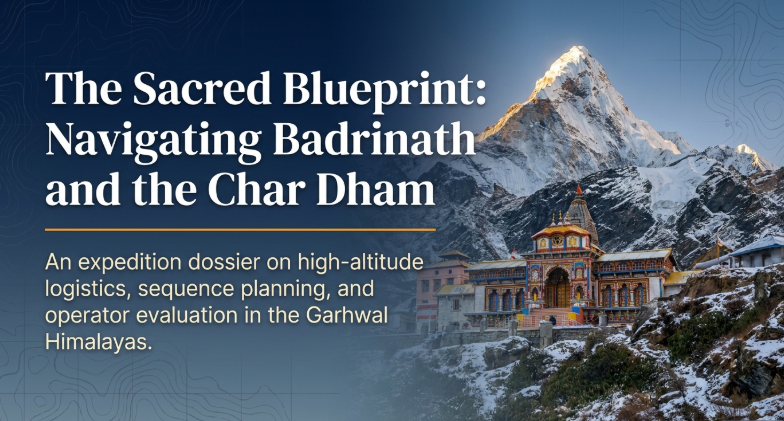
Badrinath Travel Agents / Tour Operators / Agency
What should I look for in a travel agent for Badrinath? A good Badrinath travel agent should have direct on-ground experience in the Chamoli district of Garhwal — knowledge of the biometric registration process, Mana village access, optimal darshan timings at the temple, and road conditions on the Rishikesh–Badrinath highway. SnazzyTrips, a Uttarakhand-specialist DMC operating since 2003, has managed Badrinath yatras and Char Dham circuits across every season and handles everything from Haridwar transfers to same-day darshan slots.
Quick Summary
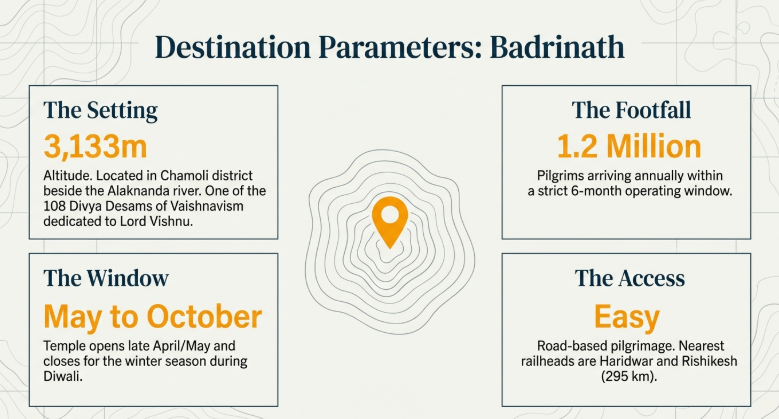
| Detail | Info |
|---|---|
| Best Time to Visit | May–June and September–October |
| Temple Opens | Late April / Early May (date announced annually) |
| Temple Closes | October / November (Diwali period) |
| Altitude | 3,133 m above sea level |
| Difficulty Level | Easy — road-based pilgrimage |
| Who It's For | Pilgrims, families, senior travellers, Char Dham yatris |
| Nearest Railhead | Haridwar (295 km) / Rishikesh (295 km) |
| Why SnazzyTrips | 21+ years in Garhwal, biometric support, curated yatra circuits |
Introduction
There is a moment on the drive to Badrinath — somewhere after Joshimath, as the road narrows and the Alaknanda river appears below — when the scale of the Himalayas stops feeling like scenery and starts feeling like something else entirely. Something older. Something that explains why people have been making this journey for over a thousand years.
Badrinath is one of the four Char Dham shrines of the Garhwal Himalayas. It sits at 3,133 metres in the Chamoli district of Uttarakhand, flanked by the Nar and Narayan mountain ranges and nestled beside the Alaknanda river. The Badrinath temple — dedicated to Lord Vishnu — is one of the 108 Divya Desams of Vaishnavism and draws over 1.2 million pilgrims in a single season.
For most travellers, Badrinath is not a standalone trip. It is the final and highest point of the Char Dham Yatra — the pilgrimage circuit covering Yamunotri, Gangotri, Kedarnath, and Badrinath in sequence. This circuit requires careful logistics, local operator knowledge, and — increasingly — advance booking of accommodation and biometric registration.
This is exactly why specialist operators matter. SnazzyTrips, a DMC in Uttarakhand since 2003, has been running Badrinath yatras and full Char Dham packages for over two decades. This guide helps pilgrims and travel agents understand what a well-planned Badrinath trip looks like — and what to look for before booking.
Why Badrinath Requires a Specialist Operator
Badrinath is not Nainital. It is not Mussoorie. The logistics here have real consequences — for safety, for darshan access, and for the quality of the spiritual experience.
The Biometric Registration Requirement
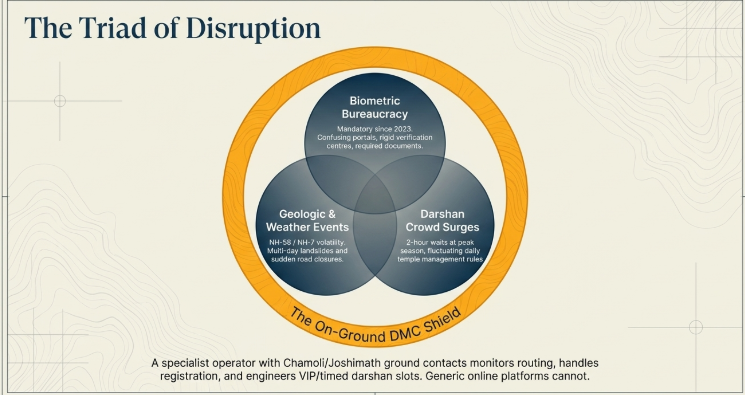
Since 2023, the Uttarakhand government has made biometric registration mandatory for all Char Dham yatris. Each pilgrim must register online, complete biometric verification at designated centres, and carry their registration documents throughout the yatra.
For travellers unfamiliar with this process, the registration steps, the portal, and the verification centre locations are confusing and time-consuming. A good operator handles this end-to-end — pre-trip registration guidance, portal navigation support, and on-ground verification assistance.
Road and Weather Unpredictability
The Rishikesh–Badrinath highway (NH-58 / NH-7) passes through some of the most geologically active terrain in India. Landslides, road closures, and weather disruptions are not edge cases — they happen every season, sometimes for multiple days at a stretch.
An operator with ground contacts in Chamoli and Joshimath can monitor road conditions in real time and reroute or reschedule accordingly. A generic online booking platform cannot.
Darshan Slot Management
Badrinath temple darshan is managed through a queuing system that can mean 2-hour waits at peak season or VIP darshan access through the correct channels. A knowledgeable operator builds darshan timing into the itinerary — not as an afterthought but as a core planning element.
📍 Quick Fact: Badrinath temple receives over 1.2 million pilgrims annually during its 6-month season (May to November). Peak crowd months are May, June, and October — advance accommodation booking is essential.
Badrinath as Part of the Char Dham Circuit
Most pilgrims visit Badrinath as the fourth and final stop on the Char Dham Yatra. Understanding how Badrinath fits into the full circuit helps in planning the right package duration and pace.
The Traditional Char Dham Sequence
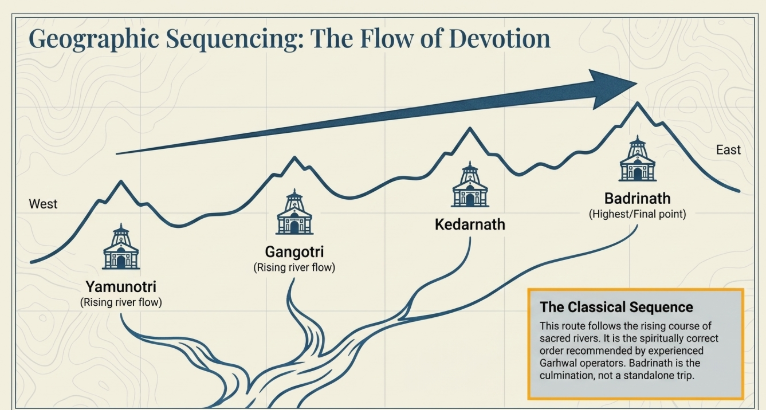
The classical Char Dham route runs west to east:
Yamunotri → Gangotri → Kedarnath → Badrinath
This sequence follows the rising course of sacred rivers and is considered the spiritually correct order by most pilgrims and priests. Completing the circuit in this direction is recommended by all experienced Garhwal operators.
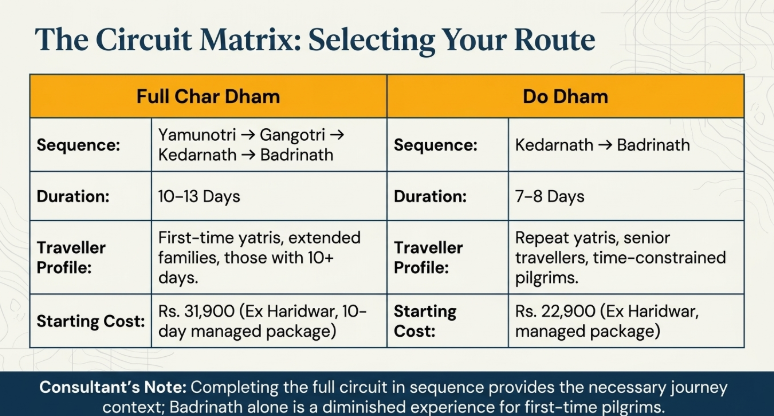
A full Char Dham circuit from Haridwar takes between 10 and 13 days depending on pace, group fitness, and road conditions. SnazzyTrips offers a Char Dham Yatra from Rs. 31,900 per person from Haridwar — a fully managed 10-day package covering all four shrines with road transfers, accommodation, meals, and ground support.
Do Dham — Kedarnath and Badrinath Only
For pilgrims who have already visited Yamunotri and Gangotri, or who have limited time, a Do Dham circuit covering only Kedarnath and Badrinath takes 7–8 days from Haridwar. This is a popular option for repeat yatris and senior travellers who want a manageable pace. The Ex Haridwar Kedar-Badri Yatra package starts at Rs. 22,900 per person.
🧭 Traveler Tip: If you are visiting Badrinath for the first time and have 10+ days, always complete the full Char Dham circuit in sequence. Badrinath alone, without the journey context of the other three dhams, is a diminished experience for most pilgrims.
SnazzyTrips Insights
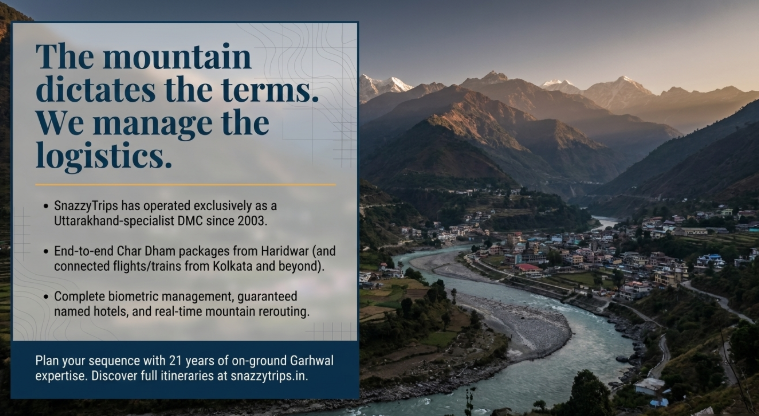
From our team at SnazzyTrips, managing Char Dham yatras since 2003:
The single biggest planning mistake we see every season is underestimating accommodation availability in Badrinath town. There are very few quality hotels in Badrinath — the town exists almost entirely to serve the temple — and the good properties book out 3 to 4 months before season opening. Travellers who plan their yatra in April for a May departure consistently find themselves in poor-quality lodges that compromise the experience.
We also find that most travellers underestimate the Mana village visit. Mana is the last Indian village before the Tibet border, just 3 km from Badrinath — it has the Vyas Gufa, Ganesh Gufa, and the Saraswati river origin point. It takes 2 hours and it is completely unmissable. We build it into every Badrinath day as a non-negotiable add-on.
For full Char Dham yatra planning with biometric support and confirmed hotel bookings, read our detailed guide on Char Dham Yatra DMC services or explore our packages at snazzytrips.in.
Best Time to Visit Badrinath — Month by Month
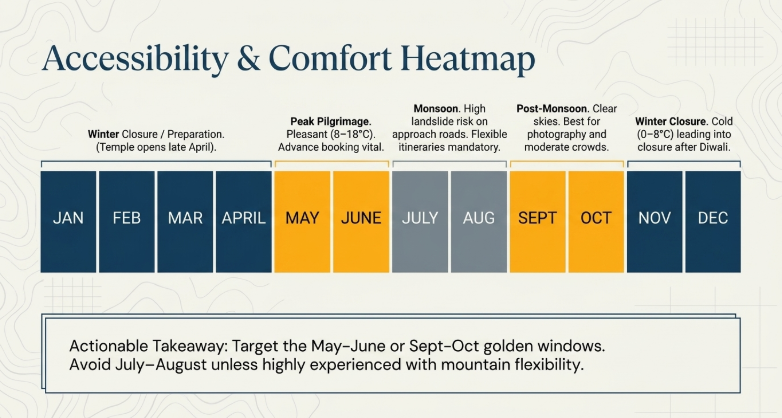
| Month | Temple Status | Weather | Suitability | Notes |
|---|---|---|---|---|
| January | Closed | Heavy snow | Not accessible | Temple in winter closure |
| February | Closed | Snow, -10°C | Not accessible | Road blocked |
| March | Closed | Cold, snow melting | Not accessible | Preparation season |
| April | Opening (late Apr) | Cold, 5–12°C | For early yatris | Opening date announced annually |
| May | Open | Pleasant, 8–15°C | Excellent | Peak pilgrimage month, book early |
| June | Open | Warm, 10–18°C | Excellent | Clear skies, high footfall |
| July | Open | Monsoon | Moderate | Road risk; some operators pause |
| August | Open | Heavy rain | Caution needed | Landslide risk on approach roads |
| September | Open | Post-monsoon, 8–15°C | Excellent | Clear skies return, moderate crowds |
| October | Open (closing soon) | Cool, 4–12°C | Very Good | Final weeks; best for photography |
| November | Closing (early Nov) | Cold, 0–8°C | Last chance | Temple closes after Diwali |
| December | Closed | Snow | Not accessible | Winter closure begins |
May–June and September–October are the two ideal windows. Avoid the monsoon months of July and August unless you are experienced with mountain travel and comfortable with itinerary flexibility.
What a Badrinath Package Should Include
A well-structured Badrinath or Char Dham package from a competent operator should cover all of the following. Use this as a checklist before confirming your booking.
| Element | What to Confirm |
|---|---|
| Biometric registration support | Online registration guidance + verification centre assistance |
| Accommodation | Named hotels/guesthouses confirmed in advance — not "similar" |
| Road transfers | Private vehicle with experienced mountain driver |
| Darshan timing | Morning darshan slot built into itinerary |
| Mana village visit | Included as standard — not an optional extra |
| Meals | Breakfast and dinner at minimum; lunch logistics for long drive days |
| Emergency contacts | 24-hour reachable trip manager + local Chamoli ground contact |
| Flexibility clause | Rescheduling policy for weather and road disruptions |
If any of these elements are absent from your package documentation, ask specifically. The absence of a named hotel or a flexibility clause is a warning sign.
Costs and What to Budget
| Item | Budget | Mid-Range | Premium |
|---|---|---|---|
| Accommodation Badrinath (per night) | Rs. 1,200–2,500 | Rs. 3,500–6,000 | Rs. 8,000–14,000 |
| Meals (per day, per person) | Rs. 400–600 | Rs. 700–1,000 | Included in package |
| Road transfer (Haridwar–Badrinath–Haridwar) | Rs. 8,000–12,000 | Rs. 14,000–18,000 | Rs. 22,000+ |
| Full Char Dham package (per person, sharing) | Rs. 22,900 | Rs. 31,900–38,900 | Rs. 55,000+ |
For travellers coming from outside Uttarakhand, a complete managed package is almost always more cost-effective than self-booking. The coordination savings — transport sequencing, hotel lock-ins, darshan timing — typically outweigh the operator margin.
For pilgrims travelling from eastern India, our Char Dham Yatra package from Kolkata handles the full journey from departure city to return, including train or flight connections into Haridwar.
How to Choose a Badrinath Travel Agent — 5 Things to Check
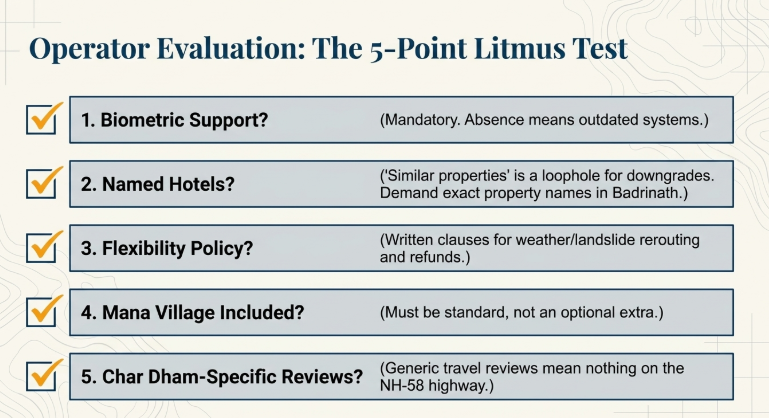
1. Do they handle biometric registration? This is now mandatory. Any operator who does not mention biometric registration in their package documentation is either uninformed or working with outdated systems. Ask specifically how they handle the registration process.
2. Do they name their hotels? "Accommodation in Badrinath" is not enough. Ask for the name of the property in Badrinath and every other halt. Unnamed "similar properties" clauses are a common way to downgrade accommodation after payment.
3. Do they have a flexibility policy for road disruptions? The Rishikesh–Badrinath highway closes due to landslides every season. Your package must have a written clause covering rescheduling, alternative routing, or refunds for weather-related disruptions.
4. Is Mana village included? It should be. If it is listed as an optional extra or not mentioned at all, the operator does not know Badrinath well enough.
5. Do they have Char Dham-specific reviews? Ask for pilgrim references or reviews that specifically mention Badrinath, Kedarnath, or the Char Dham circuit. For a full evaluation framework, our post on choosing the best travel agent for Uttarakhand walks through every checkpoint.
FAQ
Q: When does the Badrinath temple open and close?
A: The Badrinath temple opens in late April or early May — the exact date is announced annually by the temple committee based on auspicious timing (muhurat). It closes in October or early November, typically within a few days of Diwali. The opening and closing ceremonies (Kapat Utsav) are major events in themselves. SnazzyTrips tracks the Kapat dates every year and updates package availability accordingly.
Q: Is prior registration required to visit Badrinath?
A: Yes. Since 2023, all Char Dham pilgrims including Badrinath visitors must complete biometric registration through the Uttarakhand government's yatra registration portal before beginning the journey. Registration is free and must be completed online before departure. Verification centres are located at Haridwar, Rishikesh, and other entry points. A competent operator will guide you through this process before your trip.
Q: How many days do I need for Badrinath only?
A: If you are visiting Badrinath as a standalone destination, a minimum of 3 nights and 4 days from Haridwar is required — one day for travel to Badrinath, one full day for darshan and Mana village, and one day for the return journey. Adding a night at Joshimath on the way up is strongly recommended for altitude acclimatisation and to reduce rush-hour darshan queues.
Q: How do I reach Badrinath from Haridwar?
A: The standard route is Haridwar → Devprayag → Rudraprayag → Chamoli → Joshimath → Badrinath, a distance of approximately 295 km taking 9–11 hours by road. Most operators recommend an overnight halt at Joshimath (1,890 m) rather than a single-day push to Badrinath (3,133 m). SnazzyTrips assigns experienced mountain drivers on all Char Dham routes.
Q: Can I do Char Dham Yatra from Kolkata?
A: Yes. SnazzyTrips operates a fully managed Char Dham Yatra package from Kolkata that covers the train or flight connection into Haridwar, all four shrines, accommodation, meals, and return journey logistics. This is one of our most popular yatra packages for eastern India pilgrims.
Q: Is Badrinath suitable for senior travellers?
A: Yes. Badrinath is a road-accessible shrine — there is no compulsory trek involved. The temple is located directly in the town at 3,133 metres. The main consideration for senior pilgrims is altitude acclimatisation, which is managed through the Joshimath night halt. Most travellers above 60 years complete the Char Dham circuit comfortably with proper pacing. SnazzyTrips regularly operates yatras for senior groups with additional support arrangements. For a broader view of Uttarakhand travel options, explore our Uttarakhand tour packages.
Q: What is the difference between Char Dham and Do Dham?
A: Char Dham refers to the complete circuit of all four Garhwal shrines — Yamunotri, Gangotri, Kedarnath, and Badrinath. Do Dham refers to a partial circuit covering only two shrines, most commonly Kedarnath and Badrinath. Do Dham is suitable for pilgrims with 7–8 days, limited mobility, or those who have previously visited Yamunotri and Gangotri. SnazzyTrips offers both circuits with flexible departure points from Delhi, Haridwar, and other cities.
Travel Packages