Rishikesh Attractions
Rishikesh Attractions
What are the top attractions in Rishikesh? Rishikesh is famous for Laxman Jhula and Ram Jhula suspension bridges, the evening Ganga Aarti at Triveni Ghat, white-water rafting on the Ganga, and the Beatles Ashram. It also serves as the gateway to the Char Dham Yatra, making it one of the most spiritually and adventurously rich destinations in Uttarakhand. The town has something genuinely different to offer every type of traveller.
Quick Summary
| Detail | Info |
|---|---|
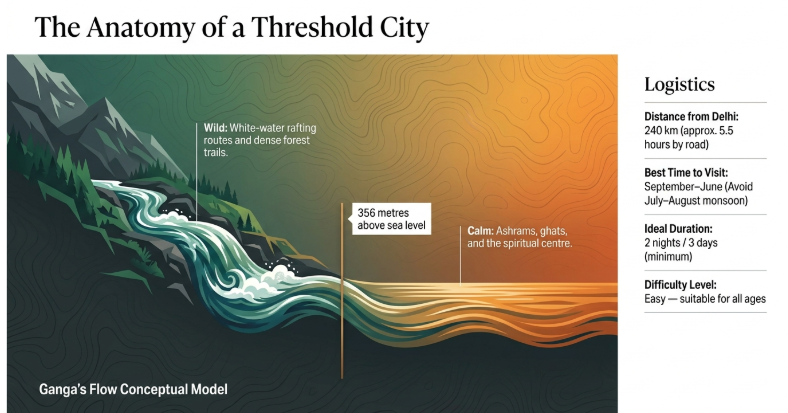
| Best Time to Visit | September–June (avoid July–August monsoon) |
| Ideal Duration | 2 nights / 3 days (min.) |
| Altitude | 356 m above sea level |
| Difficulty Level | Easy — suitable for all ages |
| Who It's For | Couples, families, adventure seekers, pilgrims, yoga practitioners |
| Distance from Delhi | 240 km (approx. 5.5 hours by road) |
| Why SnazzyTrips | 21+ years in Uttarakhand, verified hotels, curated activities |
Introduction
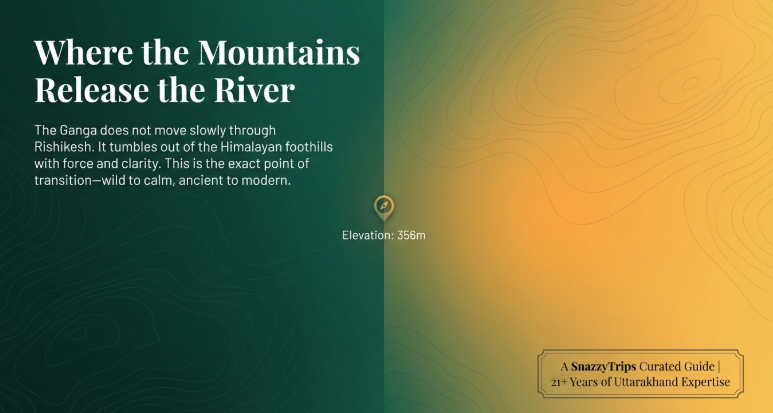
The Ganga does not move slowly through Rishikesh. It tumbles out of the Himalayan foothills with force and clarity — cold, green, and relentless. The town sits at 356 metres, right at the point where the mountains release the river into the plains. That transition — wild to calm, ancient to modern — is exactly what Rishikesh feels like from the inside.
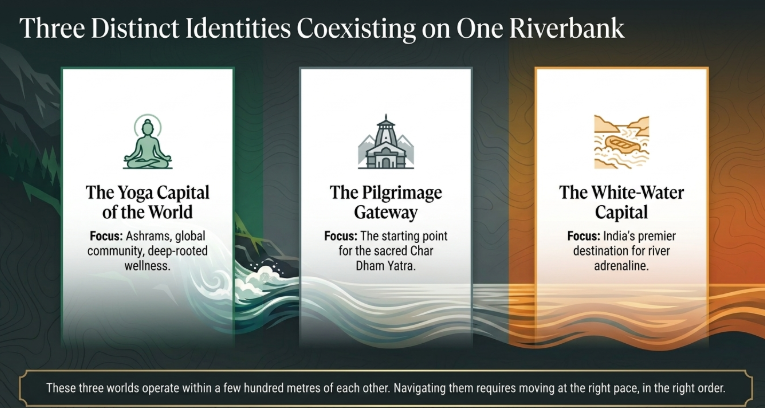
Rishikesh is called the Yoga Capital of the World. It is also a major pilgrimage gateway. And it is India's white-water rafting capital. All three identities coexist — sometimes within a few hundred metres of each other — which is part of what makes it so consistently rewarding to visit.
The Beatles stayed here in 1968 at Maharishi Mahesh Yogi's ashram. That visit alone put Rishikesh on the global map. But the town's real draw is older and more layered — temples, ghats, forest trails, suspension bridges, yoga shalas, and the constant sound of the river.
Getting the most out of Rishikesh requires knowing which attractions are genuinely worth your time, in what order, and at what hour of the day. SnazzyTrips, a DMC in Uttarakhand with over 21 years of on-ground expertise, has been curating Rishikesh itineraries long enough to know the difference between a tourist checklist and a real Rishikesh experience.
This guide covers every major Rishikesh attraction with practical details — what it is, why it matters, when to go, and what to expect.
The Ganga Ghats — Where Rishikesh Begins and Ends
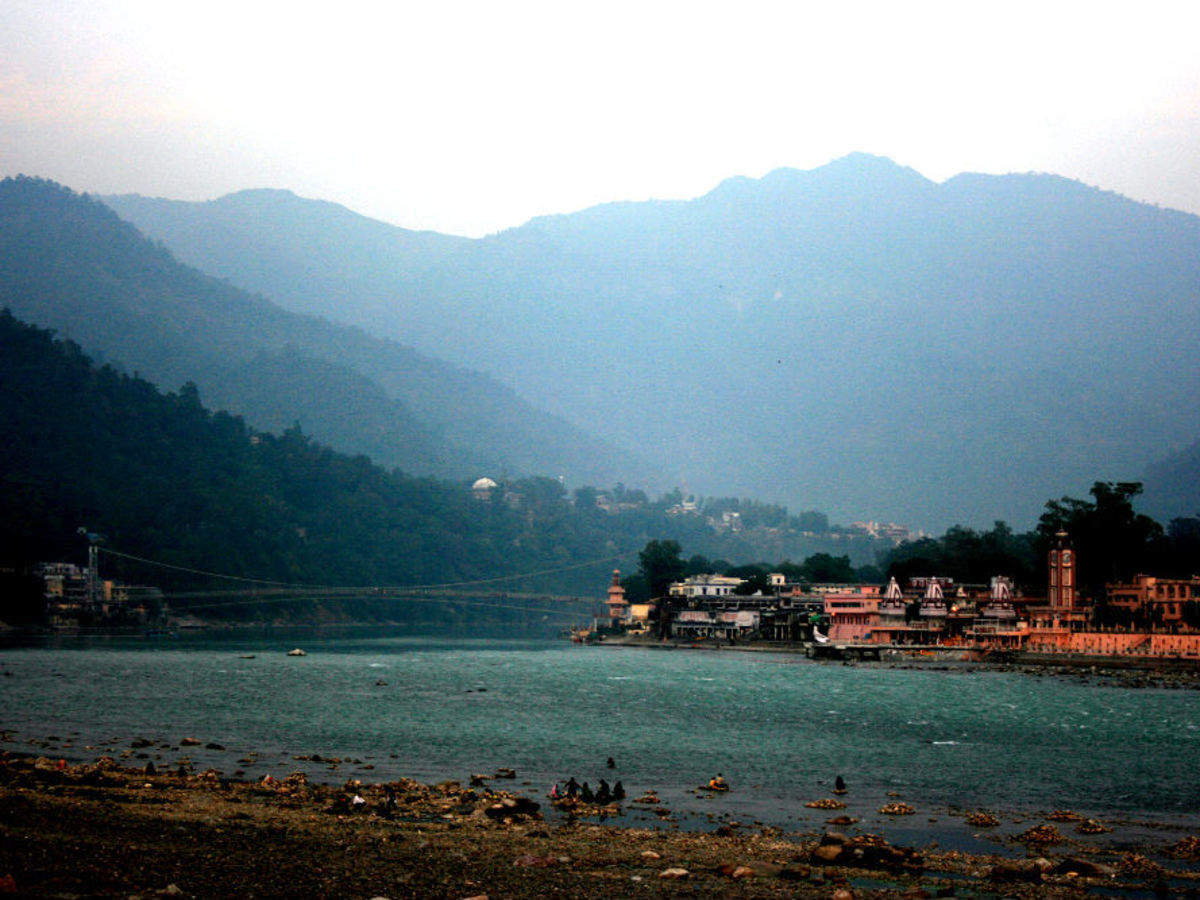
No visit to Rishikesh is complete without time on the ghats. These riverside steps are where the spiritual and social life of the town concentrates.
Triveni Ghat
Triveni Ghat is the most sacred and most visited ghat in Rishikesh. Every evening at around 6 PM, the Maha Aarti takes place here — priests swing large camphor lamps in circular arcs, conch shells blow, and the river surface reflects fire. It lasts about 45 minutes and draws hundreds of devotees and travellers nightly.
Arrive at least 30 minutes early to get a riverfront position. The aarti is free. Photography is permitted. It is one of the most photographically and spiritually powerful experiences in all of Uttarakhand.
Best time: Evening, 5:45 PM for seating, 6:00 PM for the aarti
Parmarth Niketan Ghat
The evening aarti at Parmarth Niketan ashram is slightly quieter than Triveni Ghat and often preferred by travellers who want a more contemplative experience. The ashram's tall Shiva statue overlooking the river is one of the most photographed images in Rishikesh.
📍 Quick Fact: The Triveni Ghat Maha Aarti in Rishikesh takes place every evening at approximately 6 PM and is free to attend. No prior booking or registration is required.
Laxman Jhula and Ram Jhula
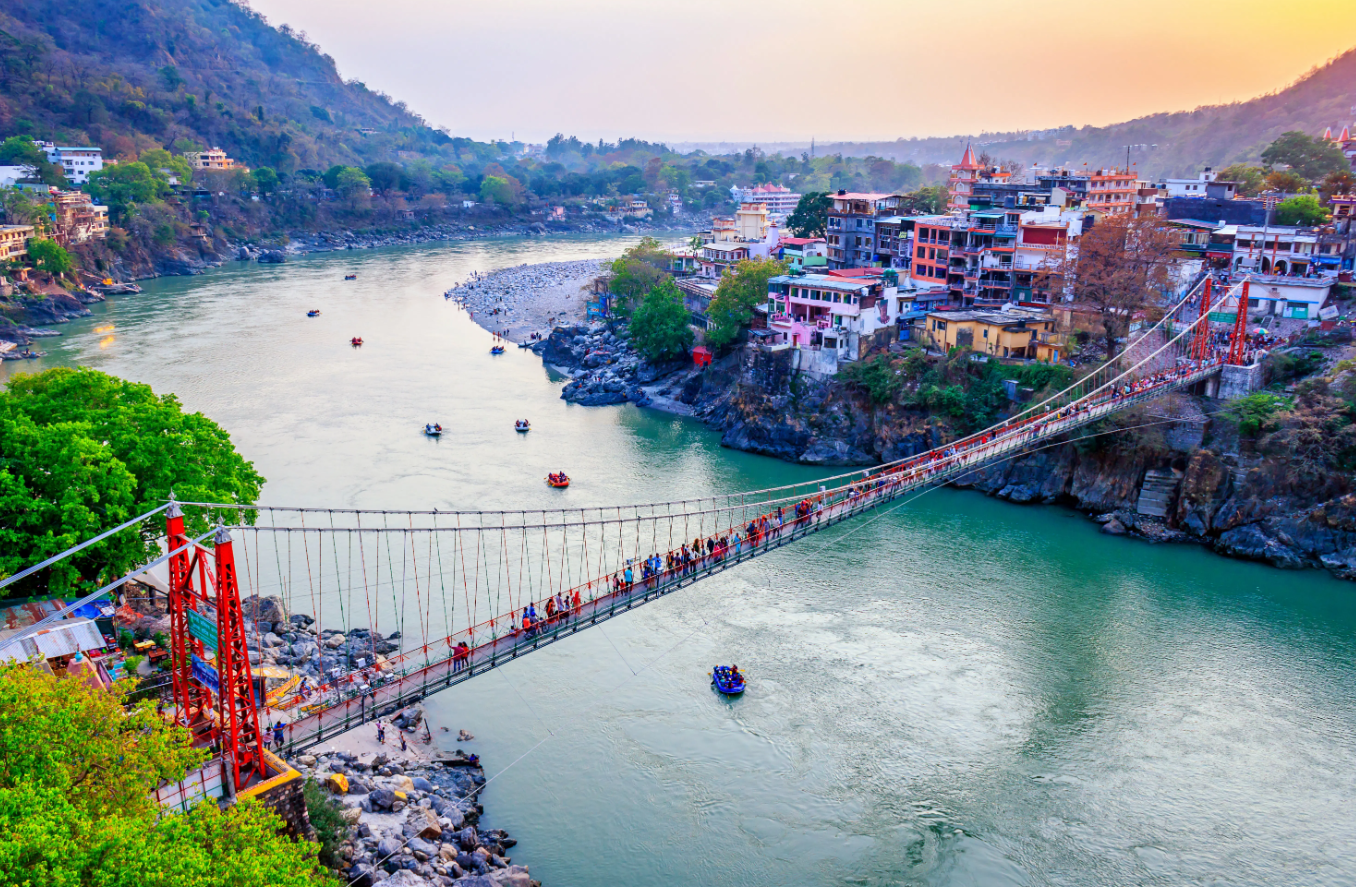
These two iron suspension bridges over the Ganga are the visual icons of Rishikesh — the images that appear in every travel photograph of the town.
Laxman Jhula
Laxman Jhula is the older and more famous of the two. According to Hindu tradition, Lord Lakshmana crossed the Ganga at this point on jute ropes. The current iron bridge dates to 1929. It sways gently under foot traffic, which adds to the experience rather than detracting from it.
Note: Laxman Jhula bridge has been closed to foot traffic since 2019 for structural repairs. As of the latest available information, repairs have been ongoing. Always confirm current access status with your operator or locally before planning to cross it.
Ram Jhula
Ram Jhula is the functional alternative and offers equally beautiful views of the river and temple clusters on both banks. The 15-minute walk between Ram Jhula and the surrounding temples — Geeta Bhavan, Swarg Ashram — is one of the best leisurely walks in Rishikesh.
🧭 Traveler Tip: Cross Ram Jhula early morning (6–7 AM) when traffic is low and the river light is golden. The same crossing at 11 AM with market crowds and motorbikes is a completely different — and less pleasant — experience.
White-Water Rafting on the Ganga
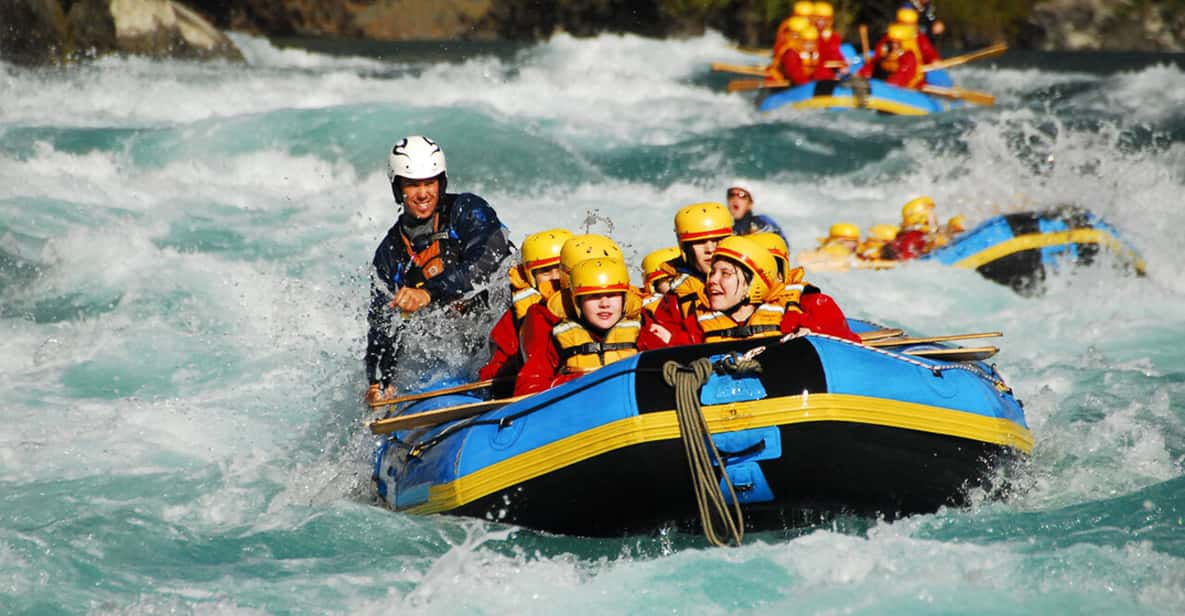
Rishikesh is the undisputed rafting capital of India. The Ganga between Shivpuri and Rishikesh offers some of the best beginner-to-intermediate white-water in the country — clean river, reliable rapids, and a dramatic mountain backdrop.
The Main Rafting Stretches
| Stretch | Distance | Rapid Grade | Best For | Duration |
|---|---|---|---|---|
| Brahmpuri to Rishikesh | 9 km | Grade I-II | First-timers, families | 1.5 hours |
| Shivpuri to Rishikesh | 16 km | Grade II-III | Most popular choice | 2.5 hours |
| Marine Drive to Rishikesh | 26 km | Grade III-IV | Experienced rafters | 3.5 hours |
| Kaudiyala to Rishikesh | 36 km | Grade IV | Advanced only | 4.5 hours |
The Shivpuri to Rishikesh stretch is the sweet spot — enough rapids to be exciting, calm enough for most fitness levels, and long enough to feel like a proper adventure.
Rafting season runs from September to June. Avoid the Ganga completely during July and August — water levels are dangerously high during monsoon.
SnazzyTrips Insights
From our team at SnazzyTrips, operating in Rishikesh for 21+ years:
The single most common mistake travellers make in Rishikesh is trying to do the ghats, rafting, Beatles Ashram, and multiple temples all in one day. It sounds achievable on paper. In practice, the combination of travel time, queue time, and the genuine pace at which Rishikesh is best experienced means you end up rushed at every stop and fully present at none.
We always plan Rishikesh over minimum two full days: one day for the spiritual circuit (ghats, temples, aarti), one day for the adventure circuit (rafting, Neergarh Waterfall, Beatles Ashram). The rhythm changes completely, and travellers consistently tell us the second day feels like a completely different destination.
For fully curated Rishikesh itineraries with activity bookings included, explore our Rishikesh tour packages starting from Rs. 4,999 per person.
The Beatles Ashram — Chaurasi Kutia

In February 1968, The Beatles arrived at Maharishi Mahesh Yogi's ashram in Rishikesh and stayed for several weeks. John Lennon, Paul McCartney, George Harrison, and Ringo Starr all came here to study Transcendental Meditation. During their stay, they wrote much of what became the White Album.
The ashram — officially called Chaurasi Kutia (84 meditation huts) — operated until the 1990s and has since been taken over by the Forest Department. It reopened as a heritage site and is now one of Rishikesh's most visited non-religious attractions.
What makes it worth visiting: the abandoned meditation domes, the forest silence, the hand-painted murals left by visitors over decades, and the surreal combination of 1960s counterculture history inside a Himalayan forest.
Entry fee: Rs. 150 for Indian nationals, Rs. 600 for foreign nationals Timings: 8 AM to 5 PM, open all week Time needed: 1.5 to 2 hours
Temples Worth Visiting in Rishikesh
Rishikesh has dozens of temples. These four are worth your time specifically.
Trayambakeshwar Temple

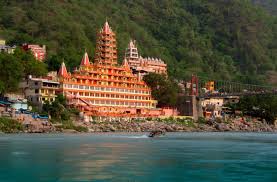
One of the oldest temples in Rishikesh, dedicated to Lord Shiva. Located near Laxman Jhula. Multi-storey architecture with river views from the upper levels. Best visited early morning before 9 AM.
Neelkanth Mahadev Temple
Located 32 km from Rishikesh at 1,330 metres, this temple marks the spot where Lord Shiva consumed the poison (halahala) during the churning of the cosmic ocean. The drive through forest is part of the experience. Allow a half-day for this visit.
Bharat Mandir
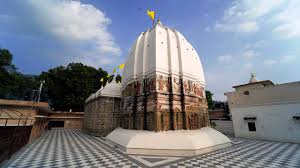
Rishikesh's oldest temple, believed to date back to the 12th century. Dedicated to Lord Vishnu. Quiet, historically significant, and typically less crowded than the riverside temples.
Kunjapuri Devi Temple
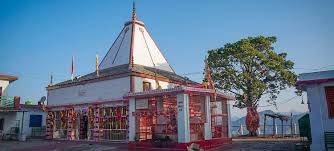
Located 25 km from Rishikesh at 1,676 metres. Sunrise views from the temple terrace cover the Garhwal Himalayan range including Gangotri, Kedarnath, and Badrinath groups on clear days. Requires an early departure (4:30 AM from Rishikesh for the sunrise).
Other Rishikesh Attractions Worth Your Time
Neergarh Waterfall
A 23-metre waterfall approximately 5 km from Rishikesh on the Badrinath highway. A short 20-minute walk through forest leads to the falls. Best visited September–November when water flow is at its strongest post-monsoon. Entry fee: Rs. 50.
Rajaji National Park
The forest area surrounding Rishikesh is part of Rajaji National Park — one of Uttarakhand's major wildlife reserves. Elephant, leopard, tiger, and over 315 bird species are recorded here. The park has safari zones accessible from Rishikesh and is an excellent half-day add-on for wildlife enthusiasts.
Yoga and Meditation
Rishikesh has hundreds of yoga schools, ashrams, and retreat centres. For a genuine yoga experience — not a tourist session — look for programmes at Parmarth Niketan, Sivananda Ashram, or Omkarananda Ganga Sadan. These institutions have structured programmes ranging from single-day intensives to month-long residential courses.
Costs and What to Budget in Rishikesh
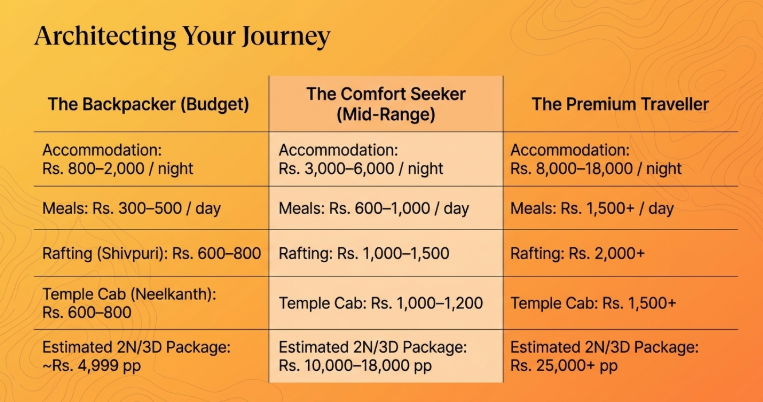
| Item | Budget | Mid-Range | Premium |
|---|---|---|---|
| Accommodation (per night, double) | Rs. 800–2,000 | Rs. 3,000–6,000 | Rs. 8,000–18,000 |
| Meals (per day, per person) | Rs. 300–500 | Rs. 600–1,000 | Rs. 1,500+ |
| Rafting (Shivpuri stretch) | Rs. 600–800 pp | Rs. 1,000–1,500 pp | Rs. 2,000+ pp |
| Beatles Ashram entry | Rs. 150 pp | Rs. 150 pp | Rs. 150 pp |
| Neelkanth temple cab (return) | Rs. 600–800 | Rs. 1,000–1,200 | Rs. 1,500+ |
| Full package 2N/3D (per person) | Rs. 4,999 | Rs. 10,000–18,000 | Rs. 25,000+ |
For travellers coming from South India, our Rishikesh tour package from Chennai at Rs. 22,999 per person covers 6 days / 5 nights with flights factored in — handling the full journey from departure city to return.
FAQ
Q: What is Rishikesh most famous for?
A: Rishikesh is most famous for three things: white-water rafting on the Ganga, the evening Ganga Aarti at Triveni Ghat, and being the Yoga Capital of the World. It is also the starting point for the Char Dham Yatra and home to the Beatles Ashram, where The Beatles composed much of the White Album in 1968.
Q: Is Rishikesh suitable for families with children?
A: Yes. Rishikesh is very family-friendly. The ghats, temples, Ram Jhula walk, and Neergarh Waterfall are all accessible for children of any age. Rafting on the Brahmpuri–Rishikesh stretch (Grade I-II) is suitable for children above 10 years. The Beatles Ashram is an easy 2-hour heritage walk. A 3-day itinerary covering both spiritual and mild adventure activities works well for most families.
Q: What is the best time to visit Rishikesh?
A: The best time to visit Rishikesh is October to June. October–November offers post-monsoon clarity with green surroundings. February–April is ideal for pleasant temperatures and the start of the rafting season. December–January is cold but crowd-free. Avoid July and August — monsoon makes rafting dangerous and the ghats uncomfortable.
Q: Is rafting safe for beginners in Rishikesh?
A: Yes. The Brahmpuri and Shivpuri stretches are specifically suited to beginners and non-swimmers with life jackets. Reputable operators provide helmets, life jackets, and certified guides on all rafts. Never book rafting through an unlicensed operator — always confirm the operator's Uttarakhand Tourism registration. A good travel agent like SnazzyTrips will book only verified rafting operators as part of any Rishikesh package.
Q: How many days are enough for Rishikesh?
A: Two full days and two nights is the minimum to cover the key attractions without rushing. Day one for the spiritual circuit — ghats, Ram Jhula, temples, and Triveni Ghat aarti. Day two for adventure — rafting, Beatles Ashram, Neergarh Waterfall. A third day adds Neelkanth Mahadev Temple or a Kunjapuri sunrise. For a deeper experience or yoga retreat, 5–7 days is ideal.
Q: Can I visit Rishikesh from South India?
A: Yes — Rishikesh is easily reachable from South India via flights to Dehradun (Jolly Grant Airport, 35 km from Rishikesh) or overnight trains to Haridwar (25 km). SnazzyTrips manages end-to-end travel for visitors from Chennai, Bangalore, Kerala, and Hyderabad. Our Rishikesh tour package from Chennai is a popular 6-day package designed specifically for travellers from South India.
Q: Is Rishikesh good for a solo trip?
A: Yes — Rishikesh is one of the safest solo travel destinations in India. The town has a large backpacker community, well-lit ghats, and a natural blend of yoga practitioners, pilgrims, and adventure travellers that creates a welcoming environment for solo visitors. Budget accommodation is plentiful and transport is easy to arrange. For broader Uttarakhand solo travel planning, our guide on choosing the best travel agent for Uttarakhand has useful advice on pre-trip planning.
Travel Packages