Is Joshimath Safe to Visit Now? Subsidence, Roads & Stays Explained
Status last reviewed: October 2026
Quick Answer: Yes, for most travellers, visiting or passing through Joshimath is reasonable, provided you follow local advisories. Every season, large numbers of pilgrims and tourists travel through Joshimath on the Badrinath highway and up to Auli. However, the land subsidence that hit the town in January 2023 is not fully resolved. Expert reports say some areas are still moving and need continuous monitoring, while stabilisation and drainage work is underway. In practice: passing through and short visits are generally fine; for overnight stays, choose properties outside the affected central zone, or stay up in Auli instead; avoid lingering near visibly cracked buildings or cordoned-off areas; and check district and weather advisories before travel, especially in the monsoon. The Joshimath–Auli ropeway remains closed, so Auli is reached by road.
"Is Joshimath safe?" is one of the most common questions we hear from travellers planning Auli, Badrinath, Hemkund Sahib or the Valley of Flowers. It's a fair question. In early 2023, images of cracked homes and tilting hotels in the "sinking town" were everywhere, and many people simply stopped stopping in Joshimath.
The honest answer is somewhere between the alarming headlines and the "everything's back to normal" claims you'll find on some travel sites. This guide explains what happened, what the situation looks like now, what it means for roads and stays, and how to plan a sensible trip.
SnazzyTrips is a Haldwani-based Uttarakhand DMC since 2003, trusted by 20,000+ families, covering 50+ destinations with 150+ verified local partners and a 4.6/5 average rating across verified traveller reviews. As an Uttarakhand-based DMC that has continued running trips through Joshimath since the subsidence, we follow conditions closely through our drivers, hotel partners and official updates. This article reflects that, without downplaying the risks or exaggerating them.
What Happened in Joshimath?
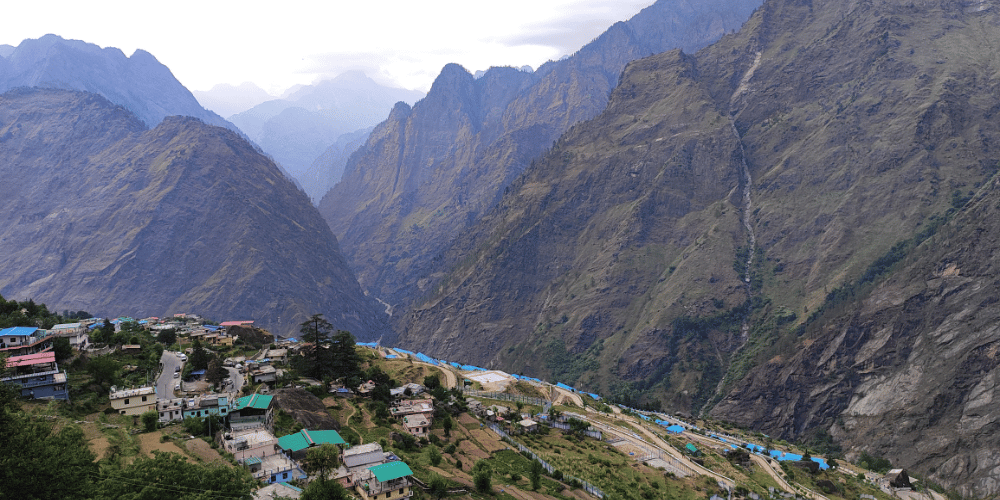
Joshimath, also called Jyotirmath, sits on a mountain slope above the Alaknanda and Dhauliganga rivers in Chamoli district. It's the gateway to Badrinath, Hemkund Sahib, the Valley of Flowers and Auli.
A brief timeline:
- Before 2023: Residents had noticed cracks in some homes for years. A government committee had warned as far back as the 1970s that the town sits on old landslide debris and needed careful construction and drainage.
- Late 2022 – January 2023: Subsidence suddenly speeded up. Cracks appeared in hundreds of buildings, roads and fields. Families in the worst-affected areas were moved to relief shelters, some unsafe hotels were dismantled, and construction in and around the town was halted.
- January 2023: The Joshimath–Auli ropeway was suspended after cracks appeared near its lower tower area.
- 2023 onwards: Scientific institutions studied the town, compensation and rehabilitation policies were announced, and work began on long-term solutions.
Satellite analysis at the time showed that the most intense subsidence was concentrated in the central part of the town, rather than spread evenly across the whole hillside.
What's the Situation Now?
Here's where things stand, based on recent official statements and published reports:
1. Expert reports have been made public. Following a High Court order, reports from several scientific institutions were released. They point to inadequate drainage and human activity as primary causes of the subsidence.
2. Some areas are still subsiding. Scientists have said Joshimath still needs continuous monitoring, and that movement has not stopped everywhere. Early studies recorded ground movement ranging from a few centimetres to several metres in different parts of the town.
3. Stabilisation work is underway. The state disaster management department has said work has started in the areas where the ground was subsiding, including toe protection along the base of the slope, which helps limit river erosion at the bottom of the hill.
4. Funding for reconstruction has been approved. The central government approved a disaster relief package of around ₹1,700 crore for Joshimath's rehabilitation and reconstruction, with the focus shifting to slope stabilisation and infrastructure repair. According to the state, around a fifth of the town was affected.
5. Daily life and travel continue. The Badrinath highway through Joshimath remains the main route for pilgrims, Auli continues to receive tourists, and most hotels, shops and services in unaffected parts of town operate normally.
In plain terms: Joshimath is a working town with a known, monitored geological problem in parts of it. It hasn't been "fixed", but it also isn't a place that travellers need to avoid entirely.
So, Is Joshimath Safe for Tourists?
It helps to separate three different situations.
1. Passing through Joshimath (Badrinath, Hemkund, Valley of Flowers, Auli)
Generally fine. This is what most travellers do. The highway is open and well used during the yatra season, and the time you spend in town is limited. Stop for meals, fuel and supplies as usual, and follow any traffic or diversion instructions.
2. Visiting sights in Joshimath
Generally fine, with common sense. Pilgrims continue to visit the town's temples and the Jyotirmath complex. Follow signage and local instructions, stay on regular paths, and don't wander into areas that are fenced off, marked unsafe, or have visibly cracked structures. If you're planning sightseeing, our guide to Joshimath's temples and nearby sights covers what's worth seeing.
3. Staying overnight in Joshimath
Possible, but choose carefully. This is where a little research matters most:
- Prefer properties outside the central affected zone.
- Check recent reviews (from the last few months, not years).
- Confirm the hotel is fully operating and hasn't been told to vacate or restrict use of any part of the building.
- Avoid buildings with visible structural cracks, sloping floors or doors that don't close properly.
For many travellers, especially in winter, the simpler choice is to stay in Auli and only pass through Joshimath. Our Auli vs Joshimath stay comparison explains the trade-offs in detail.
What we tell guests who ask us this: If you're driving through for Badrinath or Auli, don't let old headlines cancel your trip. If you're choosing where to sleep, be a little more selective in Joshimath than you would be in most hill towns. That one decision addresses most of the real risk for a visitor.
Which Parts of Joshimath Were Most Affected?
The early satellite study identified a subsidence zone in the central part of Joshimath. Its upper edge (the "crown") was mapped near the Joshimath–Auli road, and landmarks such as the army helipad and the Narsingh Temple area fell within the identified zone. Later ground surveys and scientific reports looked at the town in much more detail, and the administration has marked specific buildings and localities as unsafe.
What this means for you:
- You don't need a geological map to travel safely. Simply follow local instructions and signage, and avoid cordoned-off areas.
- If you're visiting the Narsingh Temple, the winter seat of Lord Badrinath, follow the instructions of temple and local authorities on access.
- Ask your hotel or driver about any areas currently restricted, as these can change.
We deliberately don't list "safe" and "unsafe" streets in this article, because zones are reassessed over time. Local authorities, your hotel and an on-ground operator are better sources for current, street-level detail.
Roads: Badrinath Highway and the Auli Road
The Badrinath highway through Joshimath
The highway is the lifeline of the whole region and remains open for pilgrims and tourists. As anywhere in the Garhwal Himalaya, it can be affected by:
- Landslides and rockfall during the monsoon (roughly July to September), which can close stretches for hours or occasionally longer
- Snow and cold in winter on higher sections beyond Joshimath (Badrinath itself is closed in winter)
- Traffic control during peak yatra periods
These risks exist all along the route, not just in Joshimath, and are part of normal mountain travel planning. A private cab with an experienced hill driver makes a real difference here, because drivers know where to wait out bad weather and when not to push on.
The Joshimath–Auli road
The 13–16 km road from Joshimath to Auli is open and in regular use. Since the crown of the subsidence zone was mapped near this road, it's monitored, and in winter, frost and black ice on shaded bends are a more common day-to-day issue than subsidence. Travel in daylight, use a suitable vehicle, and follow any instructions from local authorities.
The Auli ropeway
The Joshimath–Auli ropeway is still closed. It was suspended in January 2023 for safety reasons, and a new ropeway project has been proposed rather than reopening the old one. Read the current status of the Auli ropeway for the latest details.
Where to Stay: Practical Guidance
Choosing your accommodation is the single most useful safety decision you can make.
If you're visiting Auli: Stay in Auli itself where possible, especially in winter. You avoid the daily drive and the question of Joshimath stays altogether.
If you're on a Badrinath, Hemkund or Valley of Flowers trip: Many pilgrims still stay in Joshimath, and many hotels operate normally. Alternatively, depending on your itinerary, you can stay in towns further along or before the route, such as Govindghat or Pipalkoti.
Before booking any Joshimath hotel, ask:
- Is the property outside the areas marked as affected?
- Has any part of the building been restricted or repaired since 2023?
- Are there recent guest reviews?
- Is there safe road access and parking?
Our general guide on what to check in a hill-station hotel covers the standard checks: heating, access, views and so on.
One practical rule we follow: We only place guests in Joshimath properties that our team or trusted local partners have seen recently, and that are outside areas flagged by the administration. If we can't confirm both, we book the night in Auli or another town on the route instead. It's a simple filter, and it removes almost all of the uncertainty.
Does Season Matter?
Yes, and probably more than the subsidence itself for most travellers.
Monsoon (July–September): This is the riskiest season for the whole region. Heavy rain increases landslide risk on the highway and adds water to slopes, which is relevant in a town where drainage is part of the problem. Travel only if your plans need this season (for example, the Valley of Flowers bloom), keep buffer days, and check forecasts and advisories daily.
Winter (December–March): Snow and frost affect roads above Joshimath. Badrinath is closed, but Auli is in peak season. Daylight driving and good vehicles matter most. If you're planning a festive trip, see our guide to December trips to Auli, or read about Auli's winter snow pattern to pick your weeks.
Spring and autumn (April–June, October–November): Generally the most comfortable and predictable seasons for travel through Joshimath.
For Pilgrims and Trekkers
Joshimath is the gateway to some of India's most important journeys:
- Badrinath: About 45 km beyond Joshimath. A Badrinath yatra usually passes through Joshimath, and many pilgrims stop at the Narsingh Temple.
- Char Dham: If you're doing the full Char Dham Yatra, Joshimath is a regular halt on the Badrinath leg.
- Valley of Flowers and Hemkund Sahib: Reached via Govindghat, just beyond Joshimath. A Valley of Flowers trek can be planned with overnight stays in Govindghat or Ghangaria, reducing nights in Joshimath if you prefer.
For all of these, the subsidence is a reason to plan stays carefully, not a reason to cancel.
For Families and Senior Travellers
- Keep Joshimath nights to a minimum if you're anxious about the situation. Stay in Auli or another town instead.
- Avoid long walks through older parts of town with uneven, cracked surfaces.
- Have a flexible plan in the monsoon, with buffer days and the option to change routes.
- Carry essential medicines, since medical facilities in the region are limited compared with the plains.
If you're travelling with older family members, our tips on travelling with elderly parents in the hills cover pacing, rooms and comfort.
Before You Go: A Simple Safety Checklist
- Check weather forecasts and any Chamoli district administration advisories a few days before travel
- In the monsoon, check road status on the Rishikesh–Badrinath highway daily
- Book stays outside affected zones in Joshimath, or stay in Auli
- Read recent reviews for any Joshimath property
- Travel in daylight on mountain roads
- Keep a buffer day in monsoon and winter
- Follow signage and avoid cordoned-off or visibly damaged areas
- Share your itinerary with someone at home
- Carry offline maps; mobile signal can be patchy
Should You Still Visit Joshimath?
Joshimath's people have had a very difficult few years. Many families lost homes, and local businesses suffered as travellers started driving straight through. Visiting responsibly, staying in safe and well-chosen properties, eating at local dhabas, and hiring local drivers and guides supports a town that depends heavily on tourism.
At the same time, nobody should feel pressured to stay overnight somewhere they're uncomfortable. The balanced approach works well: pass through or visit with care, choose your bed thoughtfully, and follow local guidance.
If you'd rather not navigate this alone, an on-ground local operator can tell you which properties are operating normally and adjust plans quickly if conditions change. Our guide to choosing a travel company you can trust lists the questions worth asking.
We plan Auli tour packages built around current road conditions, with vetted stays in Auli or Joshimath and buffer days where needed. Travellers starting from the plains often begin with a Haridwar to Auli trip. If you'd prefer a different region altogether this time, there's plenty to explore in other parts of Uttarakhand. And when you're ready, you can check our Auli packages for your dates.
Frequently Asked Questions
Is Joshimath safe to visit now?
For most travellers, visiting or passing through Joshimath is reasonable if you follow local advisories. The land subsidence that began in 2023 is not fully resolved, and some areas are still monitored, but the Badrinath highway and Auli road remain in use, and stabilisation work is underway. Choose overnight stays carefully and avoid cordoned-off areas.
Is Joshimath still sinking?
According to recent expert reports, some parts of Joshimath are still subsiding and the town needs continuous monitoring. Stabilisation measures, including drainage improvements and toe protection along the base of the slope, have started in affected areas.
Is it safe to stay overnight in Joshimath?
Many hotels in Joshimath operate normally, but choose a property outside the affected central zone, check recent reviews, and confirm the building hasn't been restricted or damaged. If you're unsure, staying in Auli or another town on the route is a simple alternative.
Is Auli safe to visit after the Joshimath subsidence?
Yes, Auli continues to receive tourists, and its hotels, slopes and chair lift operate seasonally. The subsidence mainly affected the central part of Joshimath town. Auli is reached by road from Joshimath, because the Joshimath–Auli ropeway remains closed.
Is the road to Badrinath open through Joshimath?
Yes, the Badrinath highway through Joshimath remains the main route for pilgrims during the yatra season. Like all mountain roads in the region, it can be affected by landslides in the monsoon and by snow on higher sections in winter.
Which areas of Joshimath were affected by subsidence?
The most intense subsidence was concentrated in the central part of the town, with its upper edge mapped near the Joshimath–Auli road. The administration has marked specific buildings and localities as unsafe. Follow local signage and instructions, and ask your hotel or driver about current restrictions.
What caused the Joshimath land subsidence?
Expert reports made public after a High Court order identified inadequate drainage and human activity as primary causes. Joshimath is also built on old landslide debris, a vulnerability that a government committee flagged as far back as the 1970s.
Is the Joshimath–Auli ropeway working?
No. The ropeway was suspended in January 2023 after cracks appeared near its lower tower area, and it remains closed. A new ropeway has been proposed, but no reopening date has been announced. Travel between Joshimath and Auli is by road.
When is the safest time to travel through Joshimath?
Spring (April–June) and autumn (October–November) are generally the most stable and comfortable seasons. The monsoon (July–September) carries the highest landslide risk across the region, and winter brings snow and frost on higher roads.
How does SnazzyTrips plan trips through Joshimath?
SnazzyTrips is a Haldwani-based Uttarakhand DMC operating since 2003, trusted by 20,000+ families across 50+ destinations. With 150+ verified local partners and a 4.6/5 average rating across verified traveller reviews, the team uses recently checked properties outside affected zones, follows official advisories, and builds buffer days into Auli, Badrinath and Valley of Flowers itineraries.
Final Word
Joshimath isn't the disaster zone some headlines suggested, and it isn't fully back to normal either. It's a historic mountain town managing a serious, monitored geological problem in part of its area. For travellers, that means a few sensible choices: pass through and visit with care, sleep in well-chosen properties (or in Auli), avoid the riskiest season if you can, and keep an eye on local advisories. With those in place, the road to Auli, Badrinath and the Valley of Flowers is very much open.
This article reflects publicly available information and on-ground reports at the time of review. Conditions can change; always check the latest official advisories before travel.
Travel Packages