Places to Visit in Joshimath (Jyotirmath): Temples, Math & Kalpavriksha
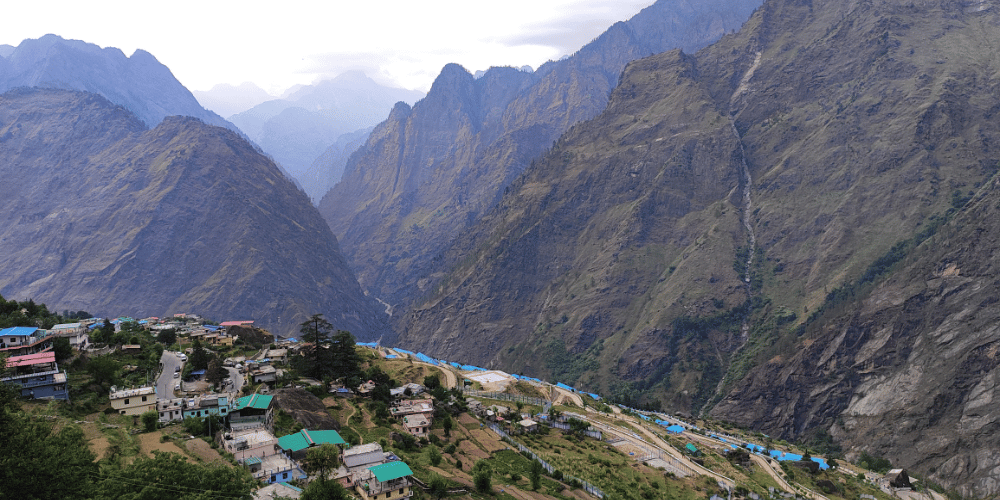
Quick Answer: The most important places to visit in Joshimath are the Narsingh Temple, the winter seat of Lord Badrinath; Jyotirmath, one of the four cardinal monasteries established by Adi Shankaracharya; the ancient Kalpavriksha mulberry tree and the nearby Jyotishwar Mahadev shrine; and Shankaracharya's meditation cave. Within a short drive are Vishnuprayag, the confluence of the Alaknanda and Dhauliganga; Tapovan's hot springs; Bhavishya Badri; and Yogdhyan Badri at Pandukeshwar. Auli is 13–16 km uphill, and Badrinath about 45 km ahead. Half a day covers the town's main temples, and a full day lets you add Vishnuprayag or Tapovan. Follow local guidance in areas affected by land subsidence.
Most travellers know Joshimath only as the place they drive through: a busy stretch of the Badrinath highway, a fuel stop on the way to Auli, a last market before the Valley of Flowers. That's a pity, because Joshimath is one of the oldest and most significant spiritual towns in the Himalaya.
Its older name, Jyotirmath, comes from the monastery Adi Shankaracharya is believed to have founded here more than a thousand years ago. Every winter, when snow closes the road to Badrinath, the worship of Lord Badrinath moves down to Joshimath. And under a gnarled old mulberry tree on the edge of town, pilgrims still sit where Shankaracharya is said to have meditated.
This guide covers the places worth your time in and around Joshimath: what each one is, why it matters, and how to fit it into a trip. SnazzyTrips is a Haldwani-based Uttarakhand DMC since 2003, trusted by 20,000+ families, covering 50+ destinations with 150+ verified local partners and a 4.6/5 average rating across verified traveller reviews. As a Haldwani-based Uttarakhand travel specialist that runs Auli and Badrinath trips every season, we see first-hand how much a few unhurried hours in Joshimath add to a journey.
Joshimath or Jyotirmath?
They're the same town. Jyotirmath is the older name, linked to the monastery (math) of Adi Shankaracharya and the jyoti (divine light or knowledge) he is said to have attained here. Over time, it was commonly shortened to Joshimath. In recent years, the official name has been changed back to Jyotirmath, so you'll see both on signs, maps and tickets.
Places to Visit in Joshimath at a Glance
| Place | Location | What It Is | Time Needed |
|---|---|---|---|
| Narsingh Temple | Joshimath town | Temple of Lord Narsingh; winter seat of Lord Badrinath | 45–60 min |
| Jyotirmath (Jyotir Math) | Joshimath town | One of Adi Shankaracharya's four cardinal mathas | 45–60 min |
| Kalpavriksha & Jyotishwar Mahadev | Near the math | Ancient mulberry tree and Shiva shrine | 30 min |
| Shankaracharya Gufa | Near the math | Cave where Shankaracharya is believed to have meditated | 15–20 min |
| Vishnuprayag | Below Joshimath, towards Badrinath | Confluence of Alaknanda and Dhauliganga | 45–60 min with drive |
| Tapovan Hot Springs | ~15 km, Dhauliganga valley | Natural hot springs | 2–3 hours |
| Bhavishya Badri | Beyond Tapovan | One of the Sapt Badri temples | Half day |
| Yogdhyan Badri, Pandukeshwar | ~20 km towards Badrinath | Sapt Badri temple; winter seat of Uddhav and Kuber | 1–1.5 hours |
| Govindghat | ~20–22 km towards Badrinath | Gateway to Valley of Flowers & Hemkund Sahib | Stop en route |
| Auli | 13–16 km uphill | Meadows, ski slopes, Nanda Devi views | 1–3 days |
| Badrinath & Mana | ~45 km | Char Dham shrine and last village before Tibet border | Full day |
Distances are approximate and depend on route and road conditions.
The Spiritual Heart of Joshimath
1. Narsingh Temple
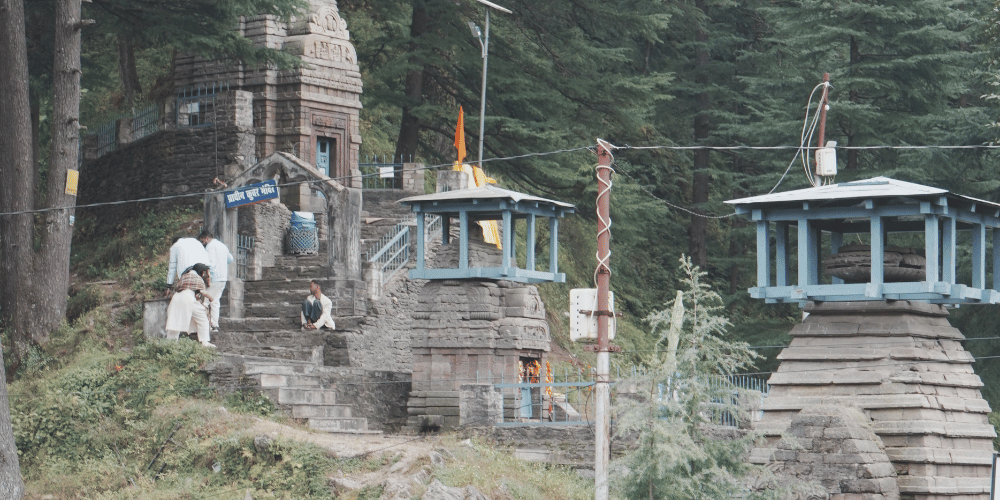
The Narsingh Temple is the most important shrine in Joshimath, dedicated to Lord Narsingh, the half-man, half-lion avatar of Vishnu.
Why it matters: When the Badrinath shrine closes for winter, usually around October or November, worship of Lord Badrinath continues here. For the cold months, the Narsingh Temple effectively becomes the winter seat of Badrinath, which is why many pilgrims who can't reach Badrinath in winter come here instead.
The legend most people hear: According to a popular local belief, the left arm of the Narsingh idol is slowly becoming thinner. When it finally separates, the story goes, the mountains Jay and Vijay near Badrinath will come together, the road to Badrinath will be blocked, and Lord Badrinath will then be worshipped at Bhavishya Badri, the "Badri of the future", near Tapovan. Whatever you make of it, it's a story you'll hear from almost every priest and shopkeeper in town.
Visiting tips:
- Dress modestly and remove footwear before entering.
- Mornings are quieter and more atmospheric than midday.
- Photography may be restricted inside the sanctum; ask before taking pictures.
- The temple area falls within the part of town studied after the land subsidence. Follow temple and local instructions on access, and don't wander into fenced or marked areas nearby.
2. Jyotirmath (Jyotir Math)
Adi Shankaracharya, the 8th-century philosopher who revived Advaita Vedanta, is traditionally believed to have established four cardinal monasteries (amnaya peethas) across India: in the north, south, east and west. Jyotirmath is the northern seat. It's considered one of the most significant institutions in Hindu monastic tradition.
What you'll find: A peaceful complex of shrines, monastic buildings and quiet courtyards above the busy highway. It isn't grand in the way some temple towns are; its significance is historical and spiritual rather than architectural.
Visiting tips:
- Keep your voice low; this is an active monastic site.
- Visitors are generally welcome, but follow instructions about restricted areas.
- Combine it with the Kalpavriksha and Shankaracharya's cave nearby, since all three are part of the same story.
3. The Kalpavriksha and Jyotishwar Mahadev
Close to the math stands the Kalpavriksha, an enormous old mulberry tree with a thick, twisted trunk. Tradition holds that Adi Shankaracharya meditated beneath it and attained enlightenment (jyoti) here, which is how the town got its name. The tree is often described as being many centuries old, with some local accounts claiming it is around 2,500 years old.
Right beside it is the Jyotishwar Mahadev shrine, dedicated to Lord Shiva. Pilgrims usually visit both together, offering prayers at the shrine and then sitting for a few quiet minutes in the tree's shade.
Why it's worth seeing: Even if you're not religious, there's something striking about a living tree woven so deeply into a town's identity. It's one of the calmest spots in Joshimath.
4. Shankaracharya Gufa (Meditation Cave)
Near the math is a small cave where Adi Shankaracharya is believed to have meditated. It's modest, a simple space rather than a dramatic cave, but for devotees it's one of the most meaningful places in town.
Tip: Space inside is limited, so expect to wait a little at busy times, and enter quietly.
Something most visitors miss: The Narsingh Temple, Jyotirmath, the Kalpavriksha and Shankaracharya's cave make a natural two-hour circuit. Most travellers only see the Narsingh Temple and drive on. If you do the full circuit slowly, preferably in the early morning before highway traffic builds, you'll understand why Joshimath was a pilgrimage centre long before it became a gateway town.
Places to Visit Around Joshimath
5. Vishnuprayag
Below Joshimath, on the way towards Badrinath, the Alaknanda and Dhauliganga rivers meet at Vishnuprayag, the first of the five sacred confluences (Panch Prayag) along the Alaknanda. The water is fast, loud and powerful, and the gorge is steep and dramatic.
Visiting tips:
- Viewpoints above the confluence give the best perspective. The rivers are dangerous, so don't go close to the water's edge.
- It fits neatly into a Badrinath day trip or a short half-day outing from Joshimath.
6. Tapovan Hot Springs
About 15 km from Joshimath along the Dhauliganga valley, Tapovan is known for its natural hot springs. It's a pleasant drive through a narrower, quieter valley, and especially enjoyable on a cold day.
Visiting tips:
- Facilities are basic; carry a towel and a change of clothes if you plan to use the springs.
- The valley saw major flood damage in 2021, so some infrastructure has changed. Check road conditions before going.
7. Bhavishya Badri
Beyond Tapovan lies Bhavishya Badri, one of the Sapt Badri (seven Badri) temples. Its name means "the Badri of the future", tied to the legend of the Narsingh idol: according to belief, this is where Lord Badrinath will be worshipped when the path to Badrinath is eventually closed.
Visiting tips: Reaching it involves a drive plus a short walk, so plan for half a day including Tapovan. Go with a local driver or guide who knows the current route.
8. Yogdhyan Badri, Pandukeshwar
About 20 km from Joshimath towards Badrinath, the village of Pandukeshwar is home to Yogdhyan Badri, another of the Sapt Badri temples. Tradition links it to King Pandu, father of the Pandavas.
Why it matters: In winter, when Badrinath closes, the idols of Uddhav and Kuber are brought down to Pandukeshwar, while Badrinath's worship continues at the Narsingh Temple in Joshimath. If you're interested in how the Badrinath tradition moves with the seasons, visiting both Joshimath and Pandukeshwar gives you the full picture.
9. Govindghat
About 20–22 km from Joshimath, Govindghat sits beside the Alaknanda and is the starting point for the Valley of Flowers and Hemkund Sahib. There's a gurudwara serving pilgrims, and the trail (with road extensions in recent years) climbs from here towards Ghangaria.
If you're planning that trek, explore our Valley of Flowers and Hemkund Sahib trip options; Joshimath is the natural last overnight before you start.
10. Auli
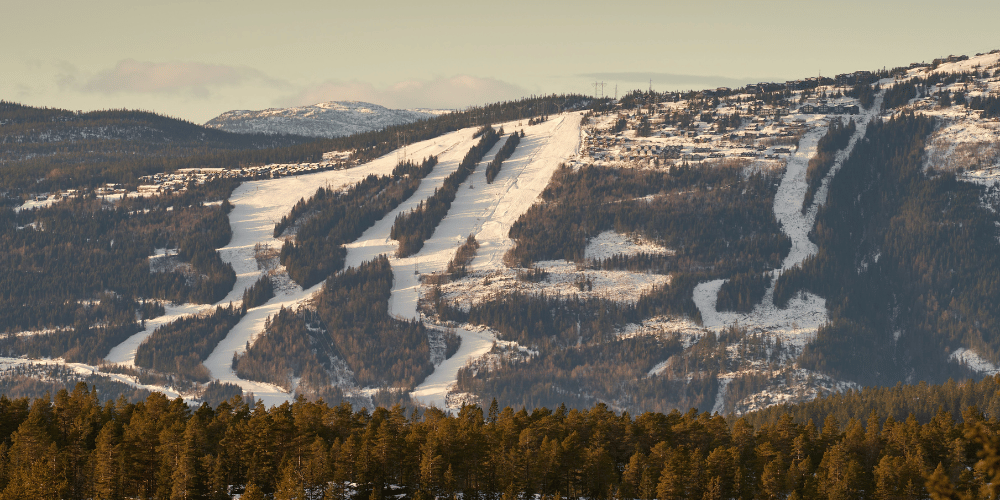
Just 13–16 km uphill, Auli is Joshimath's famous neighbour: high meadows, ski slopes in winter, the Gorson Bugyal trail and some of the best Nanda Devi views in India. For everything up there, see our guide to places to visit in Auli itself, and check when it snows in Auli if you want snow.
The old cable car between Joshimath and Auli isn't running, so the trip up is by road. Here's the latest Joshimath–Auli ropeway status.
11. Badrinath and Mana (Seasonal)
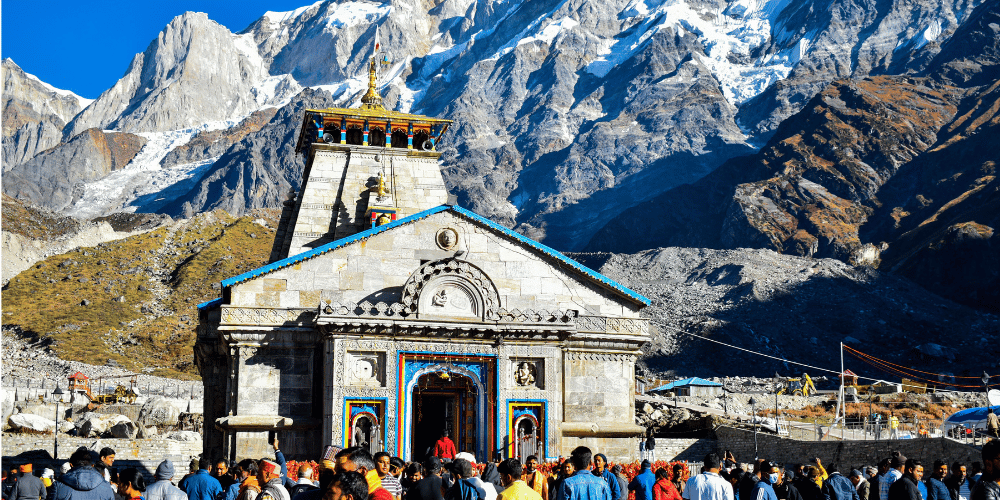
About 45 km beyond Joshimath, Badrinath is one of the holiest shrines in India and part of the Char Dham. Just beyond it, Mana is known as the last Indian village before the Tibet border. The shrine is open roughly from late April or May to October or November.
A Badrinath darshan trip almost always passes through Joshimath. If you're doing the full Char Dham Yatra route, Joshimath is a regular halt on the Badrinath leg. Travellers from western India often book a Badrinath tour from Mumbai that includes Joshimath sightseeing on the way.
Joshimath in Winter: Badrinath Comes Down the Mountain
Winter is a special time to visit Joshimath for pilgrims. When the Badrinath shrine closes for the season, the town becomes the centre of Badrinath worship, with daily rituals at the Narsingh Temple. The highway beyond Joshimath gets snow at higher points, and Badrinath itself is inaccessible, so for many devotees, Joshimath is the closest they can come to Badrinath in the cold months.
Winter also means cold mornings, early sunsets and occasional snow in the town itself, so dress warmly. If you're combining it with Auli's snow season, read whether to stay in Auli or Joshimath before booking.
A note on timing your visit: The highway through Joshimath gets busy by mid-morning in the yatra season, with buses, taxis and supply trucks. Temples and the math are noticeably calmer before 9 am and in the late afternoon. If you're staying overnight in the area, an early-morning walk around the Narsingh Temple and the Kalpavriksha is the best way to see Joshimath.
Local Food in Joshimath
Joshimath's food is simple, warm and filling, built for cold mountain days. Look out for:
- Kafuli: A green curry made from leafy greens such as spinach
- Phaanu: A slow-cooked lentil dish
- Mandua roti: Flatbread made from finger millet
- Jhangora kheer: A sweet pudding made from barnyard millet
- Hot chai and pakoras at highway dhabas, which are almost a ritual on cold days
Food along the pilgrimage route is mostly vegetarian, especially near temples.
Is Joshimath Safe to Visit?
Joshimath was affected by significant land subsidence from early 2023, particularly in the central part of the town. Daily life, pilgrim traffic and tourism continue, and stabilisation work is underway, but some areas are still monitored and certain buildings and localities have been marked unsafe.
For sightseeing, the practical advice is simple: follow signage and local instructions, avoid cordoned-off areas and visibly damaged buildings, and choose overnight stays carefully. For a full, balanced update, read about the current Joshimath safety situation before you travel.
How Much Time Do You Need in Joshimath?
- 2–3 hours: Narsingh Temple, Jyotirmath, the Kalpavriksha and Shankaracharya's cave
- Half a day: The temple circuit plus Vishnuprayag
- Full day: The temple circuit, Vishnuprayag, and either Tapovan or Pandukeshwar
- 2 days: Add Bhavishya Badri, or combine Joshimath with Auli
Suggested half-day in Joshimath
- Early morning: Narsingh Temple darshan
- Mid-morning: Jyotirmath, Shankaracharya Gufa, Kalpavriksha and Jyotishwar Mahadev
- Late morning: Drive down to Vishnuprayag viewpoint
- Lunch: Local Garhwali meal in town
Suggested full day (May–November)
- Morning: Joshimath temple circuit
- Midday: Drive towards Badrinath, stopping at Vishnuprayag and Pandukeshwar (Yogdhyan Badri)
- Afternoon: Continue to Badrinath for darshan, or return to Joshimath and drive up to Auli for sunset
Getting to and Around Joshimath
Reaching Joshimath: Most travellers come by road from Rishikesh or Haridwar, a long, scenic drive of around 250 km, usually split with an overnight halt. The nearest airport is Jolly Grant, Dehradun, and the nearest major railheads are Rishikesh and Haridwar. A Delhi to Auli package typically includes Joshimath on the way up.
Getting around: The main temple circuit can be walked, though the town is built on a slope, so expect climbs. For Vishnuprayag, Tapovan, Pandukeshwar and Auli, you'll need a vehicle. Hiring a private cab locally or keeping your trip vehicle is far more convenient than shared jeeps for multiple stops.
For older travellers: The temples involve steps and slopes. Plan rest stops and avoid the midday rush. Our guide to pilgrimages with elderly parents has more on pacing and comfort.
Temple Etiquette in Joshimath
- Dress modestly, covering shoulders and knees.
- Remove footwear before entering temples and shrines.
- Ask before photographing inside temples or of priests and monks.
- Avoid leather items inside sanctums where requested.
- Keep noise low at the math and the Kalpavriksha.
- Don't feed or disturb animals around temple areas.
- Carry small change for offerings and prasad.
Planning Your Visit
Joshimath fits naturally into almost any trip up the Alaknanda valley, whether you're heading to Auli's slopes, Badrinath's shrine or the Valley of Flowers. The key is to plan for it as a destination, not just a stop.
Our Auli tour packages that include Joshimath sightseeing build in time for the temple circuit and nearby sites, with stays chosen for safety and comfort. Working with a local tour operator who knows Joshimath helps with temple timings, road updates and safe accommodation. Before booking, read about what to ask before booking with a travel company. You can also explore wider Uttarakhand holidays, or simply plan your Auli trip with us and add Joshimath along the way.
Frequently Asked Questions
What are the best places to visit in Joshimath?
The best places to visit in Joshimath are the Narsingh Temple (the winter seat of Lord Badrinath), Jyotirmath established by Adi Shankaracharya, the ancient Kalpavriksha tree with the Jyotishwar Mahadev shrine, and Shankaracharya's meditation cave. Nearby, Vishnuprayag, Tapovan's hot springs, Bhavishya Badri and Yogdhyan Badri at Pandukeshwar are worth visiting.
Why is Joshimath also called Jyotirmath?
Jyotirmath is the town's older name, linked to the monastery Adi Shankaracharya is believed to have founded here and the jyoti (divine knowledge) he is said to have attained under the Kalpavriksha tree. The name was commonly shortened to Joshimath, and the official name has recently been changed back to Jyotirmath.
What is the significance of the Narsingh Temple in Joshimath?
The Narsingh Temple is dedicated to Lord Narsingh, an avatar of Vishnu, and serves as the winter seat of Lord Badrinath. When the Badrinath shrine closes in winter, Badrinath's worship continues here, making it one of the most important temples in the region.
What is the Kalpavriksha in Joshimath?
The Kalpavriksha is an ancient mulberry tree near Jyotirmath, traditionally believed to be where Adi Shankaracharya meditated and attained enlightenment. It stands beside the Jyotishwar Mahadev shrine and is one of the most revered spots in Joshimath.
How far is Vishnuprayag from Joshimath?
Vishnuprayag lies below Joshimath on the route towards Badrinath, where the Alaknanda and Dhauliganga rivers meet. It's a short drive from town and can easily be combined with a Badrinath day trip or a half-day outing.
How much time do I need to see Joshimath?
Two to three hours covers the main temple circuit: the Narsingh Temple, Jyotirmath, the Kalpavriksha and Shankaracharya's cave. A full day lets you add Vishnuprayag and either Tapovan or Pandukeshwar.
Can I visit Joshimath in winter?
Yes. Joshimath remains accessible in winter, and it's a meaningful time for pilgrims because Lord Badrinath is worshipped at the Narsingh Temple while the Badrinath shrine is closed. Expect cold weather and occasional snow, and travel during daylight.
Is it safe to visit temples in Joshimath after the land subsidence?
Pilgrims continue to visit Joshimath's temples. Parts of the town were affected by land subsidence and some areas are still monitored, so follow temple and local instructions, avoid cordoned-off areas and visibly damaged buildings, and check current advisories before travel.
What is Bhavishya Badri?
Bhavishya Badri, near Tapovan, is one of the Sapt Badri temples. Its name means "the Badri of the future", based on the belief that Lord Badrinath will be worshipped here when the route to Badrinath is eventually closed.
Why plan a Joshimath and Auli trip with SnazzyTrips?
SnazzyTrips is a Haldwani-based Uttarakhand DMC operating since 2003, trusted by 20,000+ families across 50+ destinations. With 150+ verified local partners and a 4.6/5 average rating across verified traveller reviews, the team plans Joshimath temple visits, Auli stays and Badrinath day trips with experienced local drivers and carefully chosen accommodation.
Final Word
Joshimath rewards those who stop. In a couple of hours, you can stand where Badrinath's worship continues through the winter, sit beneath a tree woven into the story of Adi Shankaracharya, and watch two Himalayan rivers crash together at Vishnuprayag. Give Joshimath a morning instead of a fuel stop, and your journey to Auli or Badrinath will feel complete.
Travel Packages